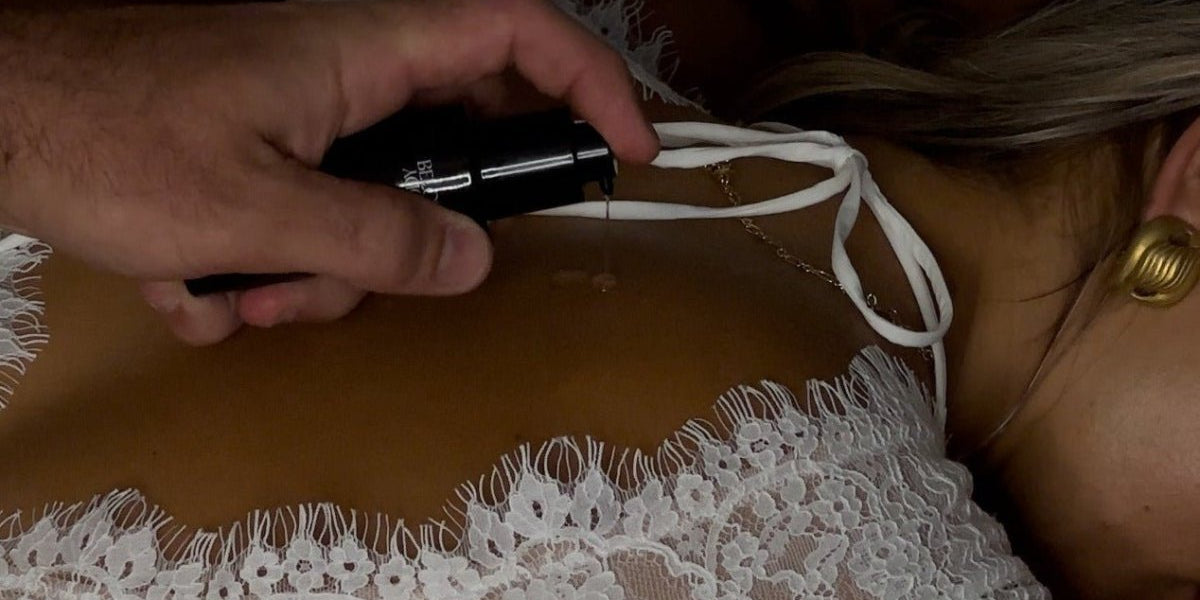
Two bottles sit on the shelf. One says body oil, one says body lotion, and the marketing on both promises soft, hydrated skin. They are not doing the same job, and if your skin still feels tight an hour after you moisturise, you are probably using the wrong one, or using the right one in the wrong order.
The body oil vs lotion question comes down to one distinction: water. Lotions contain water and can add it to the skin. Oils contain none and cannot. What oils do instead is stop the water you already have from leaving.
Here is how each one actually works, which suits which skin and which Australian climate, and how to layer them so the whole thing takes thirty seconds.
The three jobs a moisturiser can do
Every moisturising ingredient falls into one of three categories, and understanding them is the whole game.
Humectants
These attract water and hold it in the upper layers of skin. Glycerin, hyaluronic acid, urea, panthenol and honey are humectants. They add hydration. In a very dry environment with nothing sealed over the top, a humectant can pull moisture out of the deeper skin rather than the air, which is why they work best under something else.
Emollients
These sit between the cells of the skin surface and smooth it, which is what makes skin feel soft rather than rough. Most plant oils are emollients: jojoba, grape seed, sweet almond, squalane. This is the category that changes texture.
Occlusives
These form a physical barrier that slows water evaporating from the skin, known as transepidermal water loss. Heavier oils, butters, waxes and mineral oil are occlusive. They do not add anything. They keep what is there.
A body lotion is usually all three at once: water, humectants, emollients and a smaller occlusive fraction, held together by emulsifiers. A body oil is emollient and occlusive only. That is the real difference, and everything below follows from it.
Why oil seals moisture in but does not add water
Applying oil to completely dry skin is like putting a lid on an empty pot. It will feel smoother, because emollients do improve texture immediately, but you have not increased the water content of the skin at all.
This is why the order matters more than the product.
- Shower or bathe, ideally in warm rather than hot water, for around five to ten minutes.
- Pat dry with a towel and stop while the skin is still slightly damp. Not wet, damp.
- Apply your oil, or your lotion, within about three minutes. This window is when the skin still holds surface water you can trap.
- If you are using both, lotion first, oil second. Water based product under oil based product, always.
That three minute window is doing more work than the price of your moisturiser. If you take one habit from this post, take that one.
Body oil vs lotion, side by side
| |
Body oil |
Body lotion |
| Contains water |
No |
Yes, usually the largest ingredient |
| Main action |
Emollient and occlusive: smooths and seals |
Humectant and emollient: adds and holds water |
| Needs preservatives |
Generally no, because there is no water for microbes |
Yes, water based formulas require them |
| Needs emulsifiers |
No |
Yes, to bind oil and water |
| Best applied |
On damp skin, or over a lotion |
On damp skin |
| Absorbs |
Slower, sits on the surface longer |
Faster, less residue |
| Suits |
Dry, mature, flaky or wind exposed skin |
Normal to combination skin, humid weather, fast mornings |
| Watch out for |
Marking sheets and clothing, feeling heavy in humidity |
Can feel like it does nothing on very dry skin |
If you made me choose one for most people in most of Australia, I would choose a light lotion for daily use and keep an oil for the areas and seasons that need it. Oil alone, on properly dry skin, on a humid Brisbane evening, is not a pleasant experience.
Which one your skin actually needs
By skin type
-
Dry, tight, flaky: lotion on damp skin, then oil over the top. Both, in that order.
-
Normal: a lotion is usually enough. Add oil in winter.
-
Oily or breakout prone on the body: a light lotion. If you want an oil, choose a light one such as grape seed or jojoba and use very little.
-
Sensitive or reactive: fewer ingredients is genuinely better here. A simple unfragranced oil has no preservatives, no emulsifiers and a short list, which gives less to react to.
-
Mature skin: skin produces less oil over time, so the occlusive layer becomes more useful, not less.
By Australian climate
-
Summer humidity, roughly December to February: the air is already holding water, so evaporation is slower and you need less occlusion. A light lotion, applied damp, is usually plenty. Heavy oil in humidity sits on the skin and stays there.
-
Winter, June to August: cold air holds less moisture and indoor heating dries it further. This is when oil over lotion earns its place, particularly on shins, forearms and hands.
-
Air conditioning, all year: conditioned air is dehumidified air. If you spend eight hours a day in it, treat your skin as though you are in a mild winter regardless of the date outside.
-
After a beach or pool day: salt and chlorine strip the skin. Rinse in fresh water, pat damp, then apply.
After shaving
Freshly shaved skin has had its top layer disrupted, so it loses water faster and reacts more. Give it a few minutes to settle, skip anything with alcohol or strong fragrance, and use something light and calming. Our guide to shaving slowly and properly covers the technique side, and if ingrown hairs are the recurring problem, our guide to preventing ingrown hairs goes further into it.
Where Nurture fits, and where it does not
This is the part where most brands would tell you their oil does everything. Ours does not, and saying so is the point.
Nurture, A$89 for 50ml, is formulated specifically for the pubic area and the surrounding skin. It is not a general all over body oil, and using it as one would be an expensive way to moisturise your shins. It is a blend of seven plant based oils, including grape seed, jojoba, rose geranium, clary sage, chamomile, camphor and tea tree, with no synthetic fragrances, emulsifiers, preservatives, parabens or mineral oils. The texture is deliberately light because thicker oils are uncomfortable in that area.
Two to three drops, warmed between your palms and patted gently onto the skin after cleansing, shaving and your usual routine. Morning, evening, or both. It soothes, softens and nourishes, which is a modest and accurate description of what a good oil does.
For a full body massage where you want glide over a large area, a purpose made massage medium is the better choice. Melt, A$69, gives you warm oil and low light at once, and The Massage Ritual pairs the two at A$129 for people who want both jobs covered.
Frequently asked questions
Is body oil better than lotion?
Neither is better, because they do different jobs: lotion contains water and adds hydration, while oil contains no water and seals in what is already there. Dry skin usually does best with lotion applied to damp skin and oil layered over the top. In humid weather, a light lotion on its own is often enough.
Do you put body oil on before or after lotion?
Apply lotion first and body oil second, because oil forms a barrier that water based products cannot pass through. Apply both within about three minutes of getting out of the shower while the skin is still slightly damp, since that surface water is what the oil traps. Reversing the order wastes the lotion.
Does body oil actually moisturise skin?
Body oil softens skin and slows water loss, but it does not add water to the skin, because it contains none. That is why oil works best over damp skin or over a humectant product such as a glycerin based lotion. On completely dry skin, oil improves the feel of the surface without improving hydration.
Which is better for dry skin in winter, oil or lotion?
In winter, use both: a humectant lotion on damp skin to add water, then an oil over it to stop that water evaporating into dry, heated indoor air. Cold air holds less moisture and indoor heating removes more, so the sealing layer matters far more between June and August than it does in summer.
Can you use body oil on your face or intimate area?
Not automatically, because products are formulated for the area they name and skin thickness and sensitivity differ across the body. Facial skin and the pubic area both react more than the skin on your legs, so use something made for that area, apply a small amount, and patch test anything new on the inner forearm for twenty four hours first.
What to do tonight
Change the timing before you change the product. Shower, pat damp, apply within three minutes, and add oil over the top if your skin still feels tight afterwards. That costs nothing and fixes most of it.
If you want an oil made for the pubic area specifically rather than a general body product, Nurture is A$89 for 50ml and will last, since the dose is two to three drops. You can see everything we make in Shop All, and if you are buying for someone else, a Below Body gift card starts at A$50.
Shipping is free on orders over A$100 across Australia and New Zealand, and everything arrives in discreet packaging. Your skin is not a problem to solve. It just wants water, and something to keep it there.